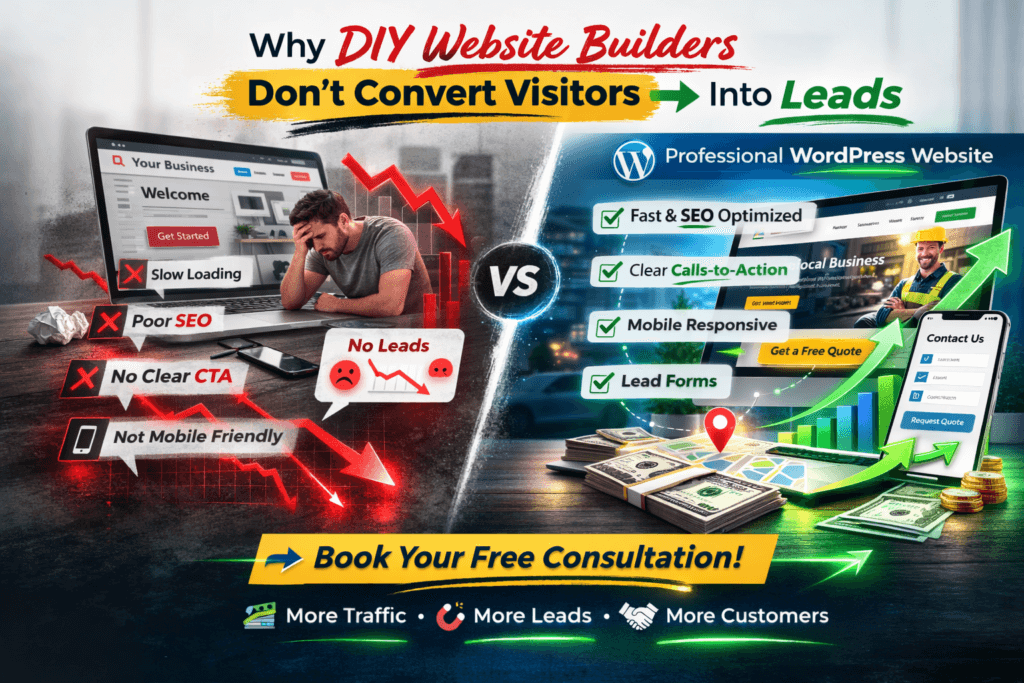
In today’s digital age, having a strong online presence is crucial for businesses to attract and convert potential customers. DIY website builders have become a popular choice for many small businesses and individuals looking to create a website quickly and affordably. However, while these platforms may offer convenience and ease of use, they often fall short when it comes to converting visitors into leads. There are several reasons why DIY website builders don’t effectively convert visitors into leads, including lack of customization options, poor user experience, limited SEO capabilities, and ineffective call-to-actions.
One of the main reasons why DIY website builders struggle to convert visitors into leads is the lack of customization options. While these platforms may offer templates and themes to choose from, they often limit the ability to customize the design and layout of the website to fit the specific needs and branding of the business. This lack of customization can result in a generic and unprofessional-looking website that fails to capture the attention of visitors and compel them to take action.
According to a study by Blue Corona, 48% of people cited a website’s design as the number one factor in determining the credibility of a business. A generic and poorly designed website created using a DIY builder may not instill trust and confidence in visitors, leading them to bounce off the site without taking any further action. Customization plays a crucial role in creating a unique and engaging website that reflects the brand identity and values of the business, ultimately helping to convert visitors into leads.
In addition to lack of customization options, DIY website builders often provide a poor user experience that can hinder conversion rates. These platforms may not offer intuitive navigation, responsive design, or mobile optimization, making it difficult for visitors to find the information they are looking for and engage with the website effectively. A study by Google found that 53% of mobile site visitors will leave a page that takes longer than three seconds to load, highlighting the importance of a seamless user experience in retaining visitors and converting them into leads.
Limited SEO capabilities are another factor that can impact the effectiveness of DIY website builders in converting visitors into leads. Search engine optimization (SEO) plays a crucial role in driving organic traffic to a website and improving its visibility in search engine results. DIY builders may not offer robust SEO tools and features, such as meta tags, alt text, and sitemaps, that are essential for optimizing a website for search engines. Without proper SEO optimization, a website created using a DIY builder may struggle to rank well in search results and attract qualified leads.
According to a survey by HubSpot, 61% of marketers say improving SEO and growing their organic presence is their top inbound marketing priority. Without the necessary SEO capabilities, a website may not be able to reach its target audience effectively and convert visitors into leads. Businesses looking to generate leads through their website should consider investing in a professional web design service that offers comprehensive SEO strategies and techniques to maximize their online visibility and conversion rates.
Finally, DIY website builders often lack effective call-to-actions (CTAs) that prompt visitors to take a specific action, such as signing up for a newsletter, requesting a quote, or making a purchase. CTAs are essential for guiding visitors through the conversion funnel and encouraging them to engage with the website and ultimately become leads. A study by Small Biz Trends found that websites with a clear CTA can increase conversion rates by 121%.
DIY website builders may offer generic and ineffective CTAs that fail to capture the attention of visitors and compel them to take action. Businesses should carefully craft compelling and relevant CTAs that are strategically placed throughout the website to encourage visitors to convert into leads. By incorporating strong CTAs that address the needs and interests of visitors, businesses can improve their conversion rates and generate more leads through their website.
In conclusion, DIY website builders may offer convenience and affordability, but they often fall short when it comes to converting visitors into leads. Lack of customization options, poor user experience, limited SEO capabilities, and ineffective call-to-actions are some of the key factors that can hinder the effectiveness of DIY builders in driving conversions. Businesses looking to maximize their online presence and generate leads should consider investing in a professional web design service that offers customization, user-friendly design, SEO optimization, and strategic CTAs to create a website that effectively converts visitors into leads.